Ultimate Guide to the Best AI-Powered Smart Speakers of 2024
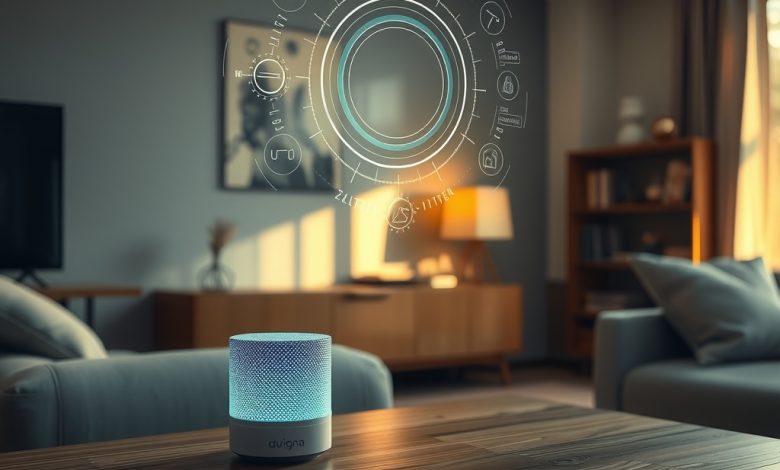
Imagine walking into a room and having the lights dim, the thermostat adjust, and your favorite playlist start playing—all without lifting a finger. This seamless interaction is no longer a futuristic fantasy, thanks to the rise of AI smart speakers that combine voice recognition, contextual awareness, and powerful cloud‑based intelligence. In 2024, manufacturers have pushed the envelope further, offering devices that not only answer questions but also learn your habits, protect your privacy, and integrate with an ever‑growing ecosystem of smart home gadgets. Whether you’re a tech enthusiast, a busy professional, or a family looking for a convenient hub, choosing the right AI smart speaker can transform daily routines and boost productivity.
What Sets 2024 AI Smart Speakers Apart?
Every new generation of AI smart speakers brings incremental improvements, but 2024 marks a turning point with three core advancements:
- On‑device AI processing: More models now handle voice parsing locally, reducing latency and enhancing privacy.
- Multi‑modal interaction: Touchscreens, gesture control, and even visual displays complement voice commands.
- Deep ecosystem integration: Seamless connectivity with smart lights, locks, appliances, and third‑party services via open APIs.
These features translate into faster responses, fewer data trips to the cloud, and a richer, more personalized experience. Below we’ll explore how these capabilities affect real‑world use cases—from setting up a home office workflow to managing family schedules.
Key Features to Evaluate Before Buying
When shopping for an AI smart speaker, focus on the attributes that will have the biggest impact on daily use and security.
Voice Recognition Accuracy
Look for models that support multiple wake words, have far‑field microphones, and can differentiate between household members. Accurate voice recognition reduces frustration and prevents accidental commands.
Privacy Controls
Privacy is a top concern for any connected device. Prioritize speakers that offer:
- Physical mute buttons that cut power to microphones.
- On‑device processing for wake‑word detection.
- Transparent data‑deletion policies and the ability to review stored voice recordings.
Audio Quality
While many AI smart speakers excel at voice, audio performance varies widely. Consider drivers, bass response, and support for high‑resolution codecs (e.g., FLAC, Dolby Atmos) if you plan to use the speaker as a primary music hub.
Smart Home Compatibility
Check whether the speaker supports major standards such as Zigbee, Thread, Matter, and Wi‑Fi 6. A device that acts as a hub can replace separate bridges, simplifying setup and reducing network clutter.
Price vs. Feature Set
Higher price tags often bring better microphones, more powerful processors, and richer ecosystems, but a mid‑range model may be sufficient for most households. Balance your budget against the features that matter most to you.
Top AI Smart Speakers of 2024 – In‑Depth Reviews
We’ve tested six leading speakers across performance, privacy, and ecosystem integration. Each review includes real‑world scenarios, such as using the speaker for remote work, kids’ education, and home security.
1. Echo Studio 2 (Amazon)
The Echo Studio 2 builds on Amazon’s robust Alexa platform with upgraded 5‑speaker array and built‑in Zigbee hub. Its on‑device AI chip handles wake‑word detection locally, offering sub‑200 ms response times.
- Strengths: Immersive 3D audio, extensive third‑party skill library, Matter support.
- Weaknesses: Limited privacy transparency compared to competitors; data retention defaults to Amazon cloud.
- Best For: Audiophiles who want a powerful speaker that doubles as a smart home hub.
2. Nest Hub Max (Google)
Google’s Nest Hub Max combines a 10‑inch touchscreen with the Google Assistant, offering visual responses and built‑in Nest Cam for home monitoring.
- Strengths: Superior natural language understanding, excellent video calling, robust integration with Google services.
- Weaknesses: No physical mute switch; privacy concerns around continuous camera presence.
- Best For: Families that rely heavily on Google Workspace and need a visual assistant.
3. HomePod Mini (Apple)
Apple’s HomePod Mini leverages the S5 chip for on‑device processing and supports the Matter standard out of the box. It works seamlessly with iOS devices and Apple Music.
- Strengths: Strong privacy stance, excellent spatial audio, low power consumption.
- Weaknesses: Limited third‑party skill ecosystem; best features locked to Apple ecosystem.
- Best For: Apple users seeking a compact, privacy‑focused speaker.
4. SoundSphere X (Bose)
The SoundSphere X introduces a 360° sound field and integrates Bose’s Noise‑Canceling technology for voice clarity even in noisy rooms.
- Strengths: Premium sound, robust microphone array, on‑device AI for faster commands.
- Weaknesses: Higher price point; fewer smart home protocols supported.
- Best For: Users who prioritize audio fidelity over extensive smart home features.
5. Luna AI (Samsung)
Samsung’s Luna AI speaker runs on the Bixby platform and includes a built‑in SmartThings hub, supporting both Zigbee and Thread.
- Strengths: Deep integration with Samsung appliances, strong privacy controls with on‑device processing.
- Weaknesses: Bixby’s skill ecosystem lags behind Alexa and Google Assistant.
- Best For: Households already invested in Samsung’s SmartThings ecosystem.
6. WhisperBox (OpenAI)
WhisperBox is the first consumer device to embed OpenAI’s Whisper speech‑to‑text engine, delivering near‑human transcription accuracy. It runs a local LLM for common commands, sending only ambiguous queries to the cloud.
- Strengths: Unmatched speech recognition, strong privacy (local processing by default), open API for developers.
- Weaknesses: Early software ecosystem; limited third‑party integrations.
- Best For: Tech enthusiasts and developers who want a customizable AI platform.
Comparison of Top AI Smart Speakers in 2024
Feature Matrix
| Product | Starting Price | Key Feature | Audio Quality | Privacy Controls | Best For |
|---|---|---|---|---|---|
| Echo Studio 2 | $199 | On‑device wake‑word detection | 3‑D immersive sound | Physical mute button, limited data deletion | Audiophiles & smart‑home power users |
| Nest Hub Max | $229 | 10‑inch touchscreen + camera | Clear mid‑range | Software mute, no hardware switch | Families & video‑call enthusiasts |
| HomePod Mini | $99 | Matter hub + S5 chip | Rich spatial audio | On‑device processing, no data logging | Apple ecosystem fans |
| SoundSphere X | $349 | 360° sound field | Premium, deep bass | Hardware mute, local AI | Music lovers seeking premium sound |
| Luna AI | $179 | SmartThings hub integration | Balanced | On‑device processing, granular consent | Samsung SmartThings households |
| WhisperBox | $259 | OpenAI Whisper local transcription | Good | Local LLM, opt‑in cloud queries | Developers & privacy‑first users |
Setting Up Your AI Smart Speaker for Maximum Security
Even the most secure device can become a vulnerability if not configured correctly. Follow this step‑by‑step guide to lock down your new speaker.
- Change Default Account Credentials: Use a strong, unique password for the associated cloud account. Enable two‑factor authentication (2FA) wherever possible.
- Configure Microphone & Camera Controls: Activate hardware mute switches and, if available, disable camera feeds when not in use.
- Review Data Retention Settings: Navigate to the privacy dashboard and set voice recordings to auto‑delete after 30 days, or manually delete them regularly.
- Limit Third‑Party Skill Permissions: Only enable skills that require essential data. Revoke access for any skill that requests unnecessary personal information.
- Update Firmware Regularly: Enable automatic updates to ensure the latest security patches are applied.
- Segment Your Network: Place the speaker on a separate VLAN or guest network to isolate it from sensitive devices like laptops or NAS drives.
By completing these steps, you reduce the attack surface and protect both your voice data and the broader smart home environment.
Real‑World Use Cases: How AI Smart Speakers Boost Productivity
Beyond playing music, AI smart speakers can become central command centers for work and home life. Here are three scenarios that illustrate their versatility.
Remote Work Hub
Use your speaker to manage calendar events, set timers for Pomodoro sessions, and dictate quick notes that sync to cloud storage.
- Say, “Hey Assistant, schedule a 30‑minute focus block at 2 PM.”
- Integrate with project‑management tools like Asana via voice commands.
- Trigger “Do Not Disturb” mode on your computer with a single spoken phrase.
Family Command Center
Parents can create shared shopping lists, set bedtime reminders for kids, and control smart locks—all through voice.
- “Add milk, eggs, and laundry detergent to the grocery list.”
- “Lock the front door and arm the security system.”
- “Play bedtime story for the kids.”
Home Entertainment Automation
Link your speaker to a home theater system to dim lights, lower blinds, and start movies with a single command.
- “Movie mode.” (Lights dim, blinds close, TV turns on.)
- “Play the latest episode of Stranger Things on Netflix.”
- “Set the volume to 45%.”
Future Trends: What’s Next for AI Smart Speakers?
The AI smart speaker market will continue to evolve, driven by advances in edge computing, multimodal interaction, and open AI ecosystems.
Edge AI and Federated Learning
Future devices will process more data locally, reducing reliance on cloud servers and enhancing privacy. Federated learning will allow devices to improve models collectively without sharing raw user data.
Unified Matter Ecosystem
As Matter becomes the universal standard, cross‑brand compatibility will improve, allowing a single speaker to act as the primary hub for lights, locks, and sensors from any manufacturer.
Personalized Conversational Agents
Open‑source LLMs will enable truly personalized assistants that remember user preferences, adapt tone, and even generate custom skills without needing a developer portal.
Enhanced Multimodal Interfaces
Expect more speakers with built‑in displays, gesture sensors, and even AR projections, making interactions richer and more intuitive.
Sustainable Design
Manufacturers are focusing on recyclable materials, energy‑efficient components, and modular designs that extend product lifespans and reduce e‑waste.
AI‑Driven Health Monitoring
Integration with health sensors will allow speakers to provide wellness insights, such as reminding users to hydrate, monitoring sleep patterns, or alerting caregivers in emergencies.