Top AI-Powered Photo Editors That Boost Your Creativity
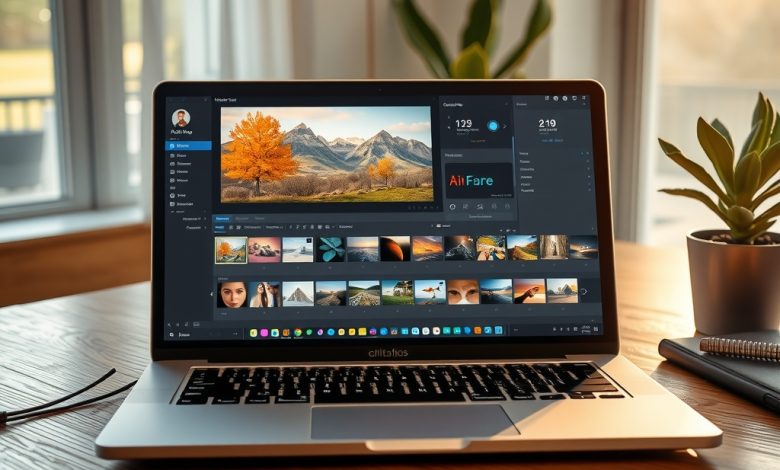
The rise of artificial intelligence has turned the world of digital imaging on its head, delivering tools that can transform a raw snapshot into a masterpiece with a single click. Whether you’re a professional photographer, a social‑media influencer, or a hobbyist looking to spice up family albums, AI photo editors are now the secret weapon that fuels creativity and saves countless hours. In this fast‑moving landscape, understanding which AI photo editors offer the best blend of power, ease‑of‑use, and privacy is essential for anyone serious about visual storytelling.
Why AI Photo Editors Are Changing the Creative Landscape
Traditional photo editing software often demands a steep learning curve and a deep knowledge of layers, masks, and color theory. AI photo editors, however, leverage machine‑learning models trained on millions of images to automate complex adjustments, making high‑quality results accessible to users of any skill level. The focus phrase “AI photo editors” appears not just as a buzzword but as a functional description of tools that can intelligently detect subjects, enhance details, and even generate artistic styles on the fly.
Key benefits driving adoption include:
- Speed: What used to take minutes or hours can now be done in seconds.
- Consistency: AI algorithms apply the same standards across large batches of images.
- Creativity Boost: Built‑in generative features let you experiment with styles you might never have tried.
- Accessibility: Cloud‑based platforms run on modest hardware, removing the need for high‑end GPUs.
Key Features to Look for in AI Photo Editors
When evaluating AI photo editors, it’s important to focus on the capabilities that directly impact your workflow and data security. Below are the core features that separate the leaders from the pack.
Core AI Capabilities
- Object Detection & Segmentation: Ability to isolate subjects for targeted edits without manual masking.
- Smart Enhancement: Automated adjustments for exposure, color balance, and sharpness based on scene analysis.
- Generative Filters: Style transfer, background replacement, and AI‑driven artistic effects.
- Batch Processing: Apply the same AI‑powered transformation to dozens or hundreds of photos simultaneously.
Privacy & Data Handling
Since many AI photo editors operate in the cloud, understanding how your images are stored and processed is crucial. Look for:
- End‑to‑end encryption during upload and download.
- Clear data retention policies—prefer services that delete files after processing or give you control over storage.
- Compliance with GDPR, CCPA, or other regional privacy regulations.
Integration & Compatibility
Seamless integration with existing tools can streamline your creative pipeline. Consider whether the editor offers:
- Plugins for Adobe Photoshop, Lightroom, or popular DAM (Digital Asset Management) systems.
- Native mobile apps for iOS and Android, enabling on‑the‑go editing.
- API access for custom automation or enterprise workflows.
Top AI-Powered Photo Editors in 2024
The market is crowded, but a handful of AI photo editors consistently receive high marks from professionals and reviewers alike. Below we dive into the standout options, highlighting their unique strengths and potential drawbacks.
Comparison of Leading AI Photo Editors
| Product/Tool | Starting Price | Key Feature | Pros | Cons | Best For |
|---|---|---|---|---|---|
| Adobe Firefly | $19.99/mo | Generative Fill & Text‑to‑Image | Deep integration with Creative Cloud, robust AI models | Requires Adobe subscription, steep learning curve for beginners | Professional designers & marketers |
| Luminar Neo | $79 one‑time | AI Sky Replacement & Structure AI | One‑time fee, powerful local adjustments, fast desktop performance | No native mobile app, limited batch automation | Photographers needing advanced desktop editing |
| Canva Magic Edit | Free / $12.99/mo Pro | One‑click background removal & style suggestions | Extremely user‑friendly, web‑based, collaborative | AI models less sophisticated than premium tools | Social media managers & small businesses |
| Pixelmator Pro (AI) | $39.99 one‑time | ML Super‑Resolution & Smart Portrait | Mac‑optimized, affordable, offline processing | macOS‑only, limited cloud features | Apple users seeking a balance of price and power |
| Remove.bg Pro | $0.25 per image | Instant background removal | Lightning‑fast API, excellent for e‑commerce | Focused only on background removal, costs add up at scale | E‑commerce operators & marketers |
Adobe Firefly
Adobe’s AI engine, Firefly, brings generative capabilities directly into Photoshop and Illustrator. Its “Generative Fill” feature lets you describe the desired change in natural language—perfect for quickly adding or removing elements without manual retouching. While the subscription cost aligns with Adobe’s broader ecosystem, the integration depth makes it a top choice for agencies that already rely on Creative Cloud.
Luminar Neo
Skylum’s Luminar Neo has earned a reputation for its AI‑driven sky replacement and structure enhancement tools. The software runs locally, which means your data never leaves your machine—a key advantage for privacy‑conscious users. Although it lacks a mobile app, its one‑time purchase model appeals to freelancers who prefer predictable costs.
Canva Magic Edit
Canva’s Magic Edit leverages AI to simplify everyday design tasks. From instantly removing backgrounds to suggesting complementary color palettes, it democratizes sophisticated editing for non‑designers. The free tier provides ample functionality for casual creators, while the Pro plan unlocks higher‑resolution exports and brand‑kit management.
Pixelmator Pro (AI)
Exclusively for macOS, Pixelmator Pro integrates Apple’s Core ML framework to deliver AI‑enhanced features like Super‑Resolution and Smart Portrait. The software processes images locally, ensuring that sensitive photos stay on your device. Its intuitive UI makes it a solid middle ground between heavyweight desktop suites and lightweight mobile apps.
Remove.bg Pro
Specializing in background removal, Remove.bg offers an API that can be embedded into e‑commerce platforms, content management systems, or custom workflows. While it’s not a full‑featured editor, its speed and accuracy make it indispensable for businesses that need to process large volumes of product images.
Pricing, Privacy, and Performance: What to Consider
Choosing the right AI photo editor isn’t just about features; you also need to weigh cost, data security, and hardware requirements. Below are the decision‑making criteria that help you align the tool with your specific needs.
Cost Structures
- Subscription Models: Services like Adobe Firefly and Canva Pro charge monthly fees, which can be advantageous for continuous updates and cloud storage.
- One‑Time Licenses: Luminar Neo and Pixelmator Pro provide perpetual access, reducing long‑term expenses but potentially lacking future AI upgrades.
- Pay‑Per‑Use: Remove.bg’s per‑image pricing suits occasional users but can become costly at scale.
Data Security & Compliance
When you upload images to a cloud‑based AI editor, you entrust the provider with potentially sensitive visual data. Verify that the service:
- Uses TLS 1.3 encryption for data in transit.
- Offers end‑to‑end encryption for stored images.
- Provides clear opt‑out options for data retention.
- Is certified under GDPR, CCPA, or ISO 27001.
Hardware Requirements
Local AI processing demands a capable GPU, especially for high‑resolution files. Here’s a quick guide:
- Basic Editing (≤12 MP): Integrated graphics (Intel Iris Xe, Apple M1) are sufficient for most cloud‑based editors.
- Advanced AI (≥24 MP): Dedicated GPU (NVIDIA RTX 3060 or Apple M2 Pro) ensures smooth real‑time previews.
- Batch Operations: Consider a workstation with at least 16 GB RAM and SSD storage to avoid bottlenecks.
Practical Workflow: Integrating AI Photo Editors into Your Projects
Even the most powerful AI photo editors deliver value only when woven into an efficient workflow. Below is a step‑by‑step guide that helps you get the most out of your chosen tool while preserving image quality and data privacy.
Step 1: Organize Your Assets
- Use a Digital Asset Management (DAM) system to tag and sort raw files.
- Maintain a consistent folder hierarchy (e.g., /RAW, /Edited, /Exports).
Step 2: Choose the Right AI Feature
Match the AI capability to the creative goal:
- For quick background removal, use Remove.bg or Canva Magic Edit.
- To enhance landscape lighting, apply Luminar Neo’s AI Sky Replacement.
- For brand‑centric graphics, leverage Adobe Firefly’s generative text‑to‑image.
Step 3: Apply Non‑Destructive Edits
Whenever possible, work on smart objects or adjustment layers so you can revert changes. This is especially important when AI suggestions are experimental.
Step 4: Batch Process for Consistency
Use the batch processing feature in Luminar Neo or the API of Remove.bg to apply the same AI enhancement across an entire shoot. This ensures uniform color grading and saves hours of manual tweaking.
Step 5: Export with Optimized Settings
- Choose sRGB color space for web and social media.
- Export at 2× resolution for print‑ready files.
- Compress JPEGs using a quality setting of 80–85% to balance size and detail.
Step 6: Archive Safely
Store final edits in an encrypted cloud backup (e.g., Backblaze B2 with client‑side encryption) and keep a local copy on an external SSD with BitLocker or FileVault enabled.
Future Trends for AI Photo Editors
The evolution of AI photo editors is far from over. Emerging technologies promise even deeper integration with creative workflows and heightened privacy safeguards.
Generative AI Meets Real‑Time Collaboration
Next‑gen platforms are experimenting with collaborative canvases where multiple users can edit the same image simultaneously, with AI suggestions appearing in real time. This could transform remote design teams and streamline client approvals.
Edge AI Processing
Advances in on‑device AI chips (Apple’s M3, Qualcomm’s Snapdragon 8 Gen 3) will enable powerful editing without sending data to the cloud, addressing privacy concerns while reducing latency.